
Personal Profile
A detailed picture of the person, including their background, interests, relationships, routines, likes, dislikes, and communication preferences. For people living with dementia, this includes detailed life history work.
At Winsome Care Ltd, the way we deliver support is just as important as the support itself. Our approach is built on person-centred planning, genuine partnership, and a relentless commitment to quality. This page explains how we work at every stage, from the initial enquiry through to ongoing support and continuous improvement.

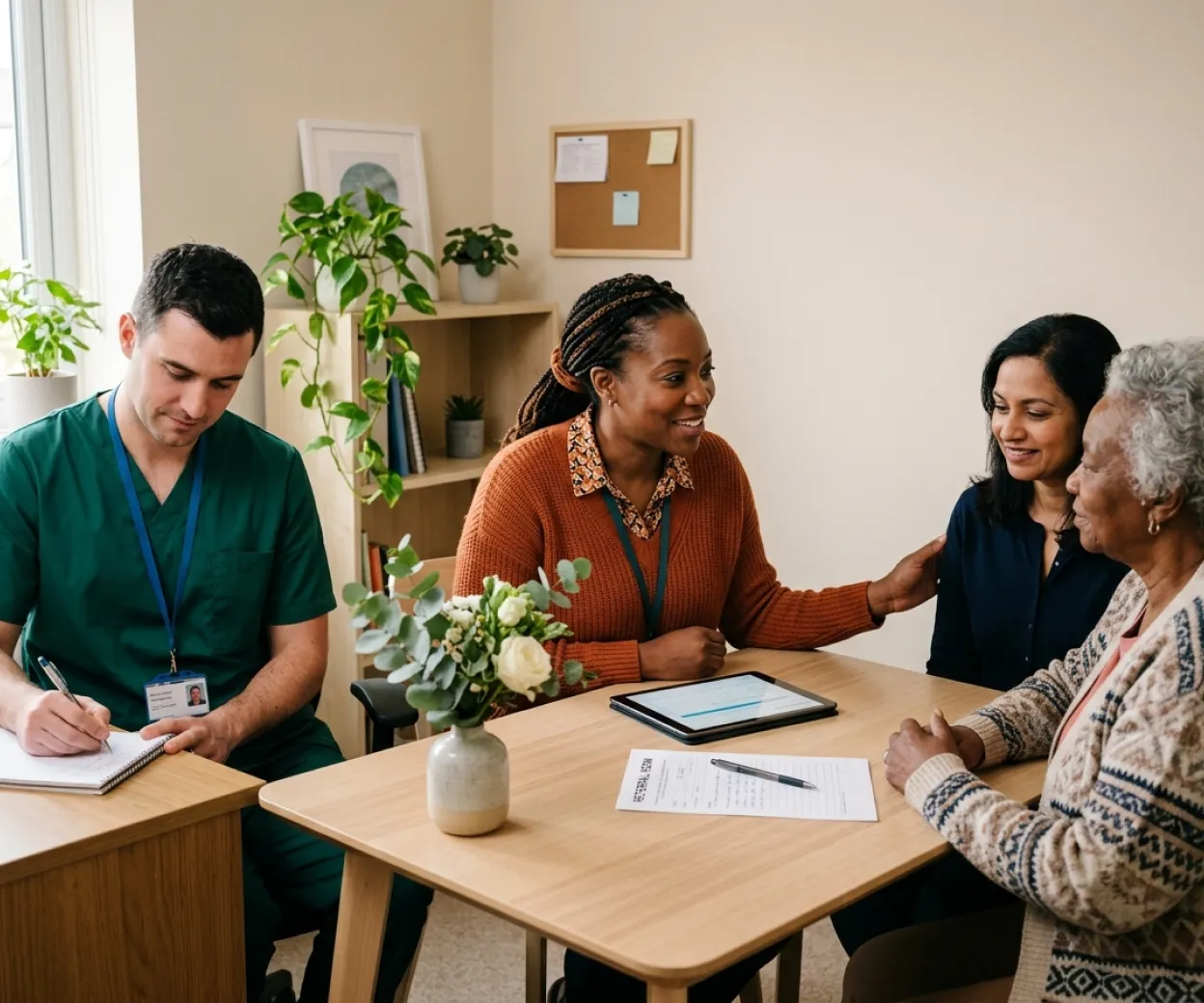
Referrals can come from a variety of sources, including the person themselves, family members, social workers, community mental health teams, hospital discharge teams, local authority commissioners, and other health and social care professionals. We welcome enquiries from anyone who is exploring supported living options in Liverpool and the wider Northwest.
When we receive a referral or enquiry, our first step is to have a conversation. We want to understand the person's needs, goals, and circumstances so we can determine whether our service is the right fit. There is no obligation at this stage, and we are always happy to provide information, answer questions, and signpost people to other services if we are not the right provider for them.
Before we begin supporting anyone, our Registered Manager or a suitably qualified senior member of staff conducts a comprehensive pre-support assessment. This is a thorough, face-to-face process that considers every aspect of the person's needs, strengths, and wishes.
The person's assessed care and support needs, including personal care, health, emotional wellbeing, and daily living requirements
Their personal goals, preferences, aspirations, and the outcomes that matter most to them
The compatibility of their needs with the skills, training, and competence of our available staff team
Any risks that need to be identified and managed, including health risks, environmental risks, and safeguarding considerations
The suitability of the proposed supported living property, including accessibility, adaptations, and the person's preferences for their living environment
Communication needs and preferred methods of communication
Cultural, religious, dietary, and lifestyle preferences
The involvement of family, advocates, and other professionals
We only accept a referral where we are confident we can deliver safe, effective, caring, responsive, and well-led support from the outset. If we identify that we cannot meet a person's needs, we will explain why and help signpost them to a more appropriate service. Learn more.
Person-centred support planning is at the heart of everything we do. Once a referral is accepted, we work with the person, their family or chosen representatives, and relevant professionals to develop a comprehensive support plan that reflects who the person is, what matters to them, and how they want to be supported.
A detailed picture of the person, including their background, interests, relationships, routines, likes, dislikes, and communication preferences. For people living with dementia, this includes detailed life history work.
Clear, meaningful outcomes that the person wants to achieve, whether that is learning to cook, building confidence to go out independently, maintaining a tenancy, or improving physical health.
A detailed picture of the person, including their background, interests, relationships, routines, likes, dislikes, and communication preferences. For people living with dementia, this includes detailed life history work.
Proportionate risk assessments that balance safety with positive risk-taking, supporting people to take reasonable risks in pursuit of their goals whilst managing identified hazards.
How the person communicates, how staff should communicate with them, and any communication aids or tools that should be used.
A summary of the person's health needs, conditions, medications, and the professionals involved in their healthcare.
Clear procedures for responding to emergencies, deterioration in health, or changes in circumstances
Support plans are available in accessible formats, including easy read, large print, audio, and translated versions as required. They are living documents that are reviewed regularly and updated to reflect changes in the person's needs, preferences, and goals. The person is always at the centre of any review, and their voice is the most important one in any decision about their support.
We believe that the relationship between a person and their support workers is one of the most important factors in achieving good outcomes. That is why we take great care in matching support workers to the people they will support.
Staff matching considers skills, experience, personality, shared interests, and, where relevant, cultural and linguistic compatibility. We aim to ensure that each person has a consistent, small team of support workers who know them well, understand their preferences, and can build a trusting, positive relationship over time.
Continuity of staffing is a core principle of our service. We know that frequent changes of support worker can be unsettling and disruptive, particularly for people living with dementia, autistic people, or people with mental health needs. Our staffing model is designed to protect continuity, with manageable caseloads and careful rota planning that prioritises the needs of the people we support.
Our support workers deliver personal care and support in accordance with each person's co-produced support plan. All support is recorded in real time using our electronic care management system, which enables the Registered Manager to maintain effective oversight of all care delivery, identify patterns or trends that require attention, and provide evidence of compliance during inspections.
Support is delivered 24 hours a day, 7 days a week, 365 days a year. Packages are flexible and can be adjusted as the person's needs change. Whether someone needs a few hours of support each week or round-the-clock, one-to-one care, we tailor our service to the individual.
We maintain a 24-hour on-call service staffed by senior management to respond to emergencies, staff queries, and any situations requiring immediate management intervention outside of normal office hours. This ensures that there is always a senior decision-maker available to support our staff and the people we care for.
Quality is not something we check at the end; it is embedded in every aspect of our service. Our quality assurance framework includes:
Unannounced Spot Checks
Regular unannounced visits by the Registered Manager and Nominated Individual to observe care delivery, speak with the people we support, and verify that standards are being maintained.
Monthly Medication Audits
Comprehensive audits covering all aspects of medication management, from storage and administration to recording and disposal.
Quarterly Support Plan Reviews
Formal reviews of every support plan to ensure they remain current, accurate, and person-centred, with the individual's active involvement.
Quarterly Health and Safety Audits
Inspections of all supported living properties to identify and address environmental risks, maintenance issues, and safety concerns.
Staff Supervision and Appraisal
Formal supervision at least every six weeks and annual appraisals, reviewed for consistency and quality.
Feedback and Surveys
Annual feedback surveys distributed to the people we support, their families, staff, and commissioners to capture their views and identify areas for improvement.
Incident and Complaints Analysis
Systematic analysis of incidents, accidents, near misses, safeguarding concerns, and complaints to identify trends, patterns, and learning opportunities.
Annual Quality Review
A comprehensive review of the entire service against all 34 quality statements, with an action plan for continuous improvement.

Effective governance is essential to delivering safe, high-quality care. Our governance structure ensures clear accountability and effective oversight at every level:
Monthly Governance Meetings
The Nominated Individual and Registered Manager meet monthly to review quality, safety, compliance, and operational performance. All meetings are documented with minutes and action plans.
Quarterly Quality Reports
Detailed reports analysing incidents, complaints, safeguarding concerns, staffing, training compliance, and outcomes for the people we support.
Regulation 28 Visits
The Nominated Individual conducts regular quality visits as required under Regulation 28, providing independent oversight of service delivery.
Annual Service Review
A full-service review against quality standards, with findings shared transparently with the people we support, staff, and commissioners.
Our staff are our greatest asset, and we invest significantly in their training and development. All staff receive comprehensive mandatory training, including:
Safeguarding adults and children
Health and safety, fire safety, and food hygiene
Moving and handling
Infection prevention and control
Basic life support and first aid
Medication administration
The Mental Capacity Act 2005 and Best Interests decision-making
Equality, diversity, and inclusion
The Oliver McGowan Mandatory Training on Learning Disability and Autism
Data protection and confidentiality

In addition, staff receive specialist training tailored to the needs of the people they support, which may include dementia awareness, positive behaviour support, autism and sensory processing, mental health awareness, trauma-informed care, epilepsy management, dysphagia awareness, and end-of-life care. We are committed to ensuring that every member of our team has the knowledge, skills, and confidence to deliver outstanding care.
We would love to hear from you. Whether you are looking for supported living for yourself, a family member, or someone you work with professionally, our team is ready to help.